Interesting Case of the Month - (IGHP, ICOM) - April
april 2026
Clinical History-
82-year-old female complaint of abdominal pain. USG whole abdomen showed a lesion in liver. Serum AFP: 3.1 ng/mL; CA19-9: 2 U/mL.
From the images below identify the likely disease?
Radiology-
PET-CT revealed an FDG avid (SUV max 10.3), poorly circumscribed heterogeneous mass lesion measuring approximately 4.0 × 5.4 cm in the subcapsular region of segment VIII of liver with associated intralesional calcific foci. Background liver showed features of chronic liver disease with fatty change.
MRI Upper Abdomen: Mixed signal intensity lesion in segment VIII of liver which shows T2 hypointense component and T2 intermediate soft tissue signal intensity component.
Microscopic Images-
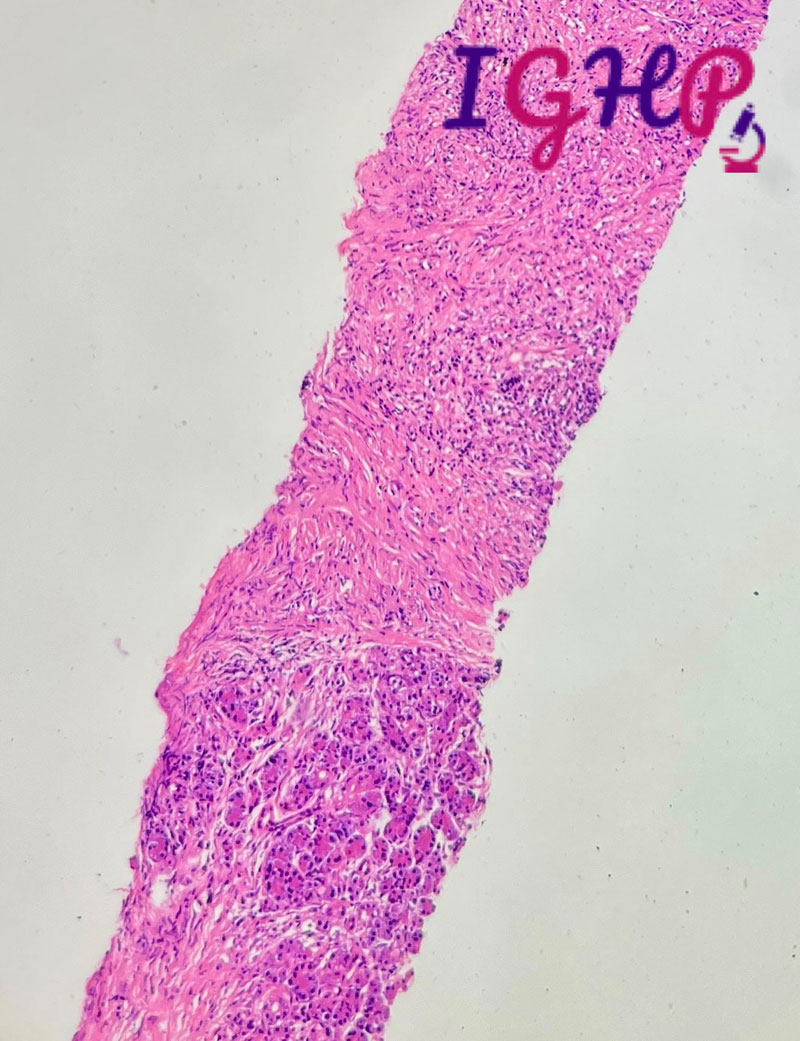
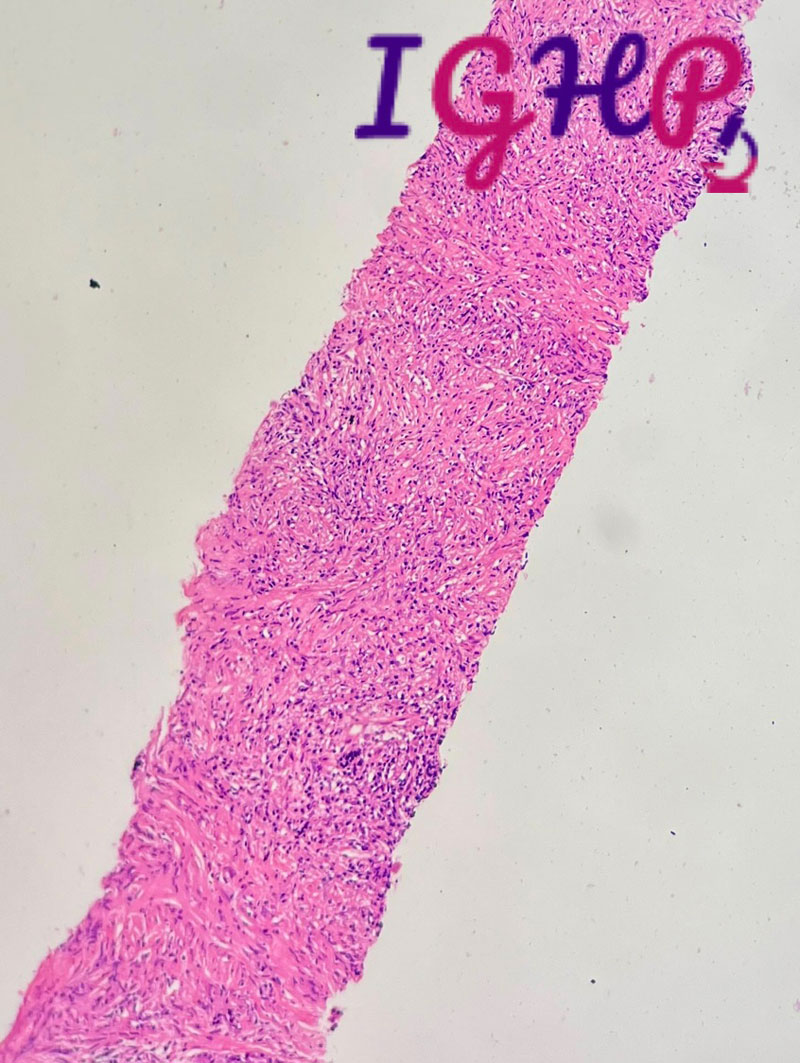
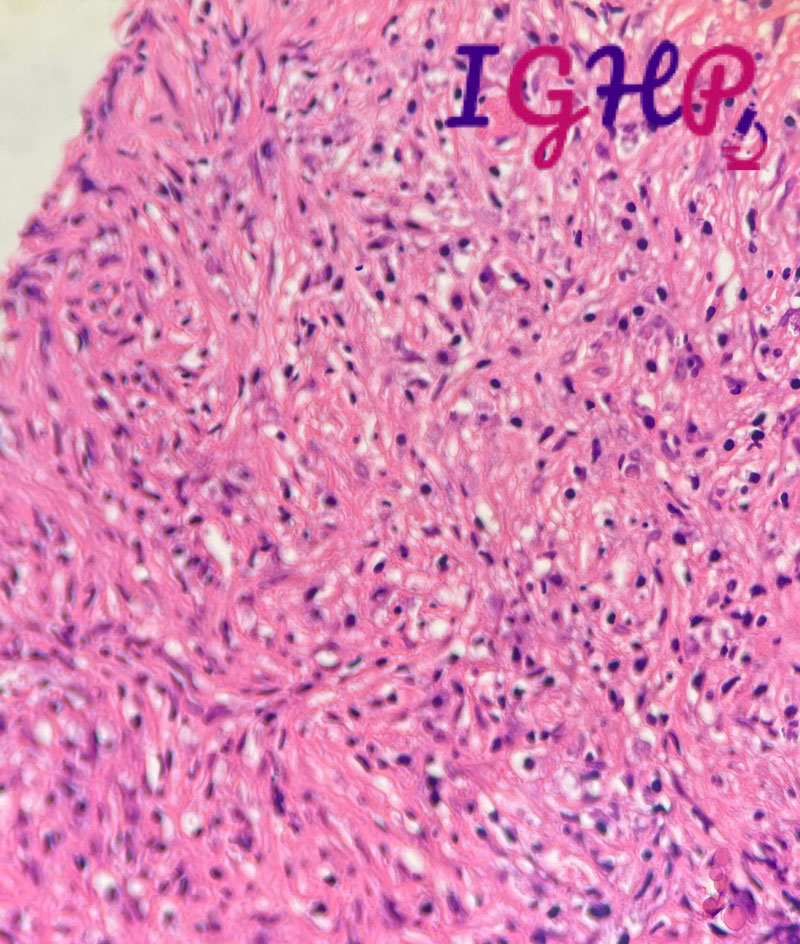
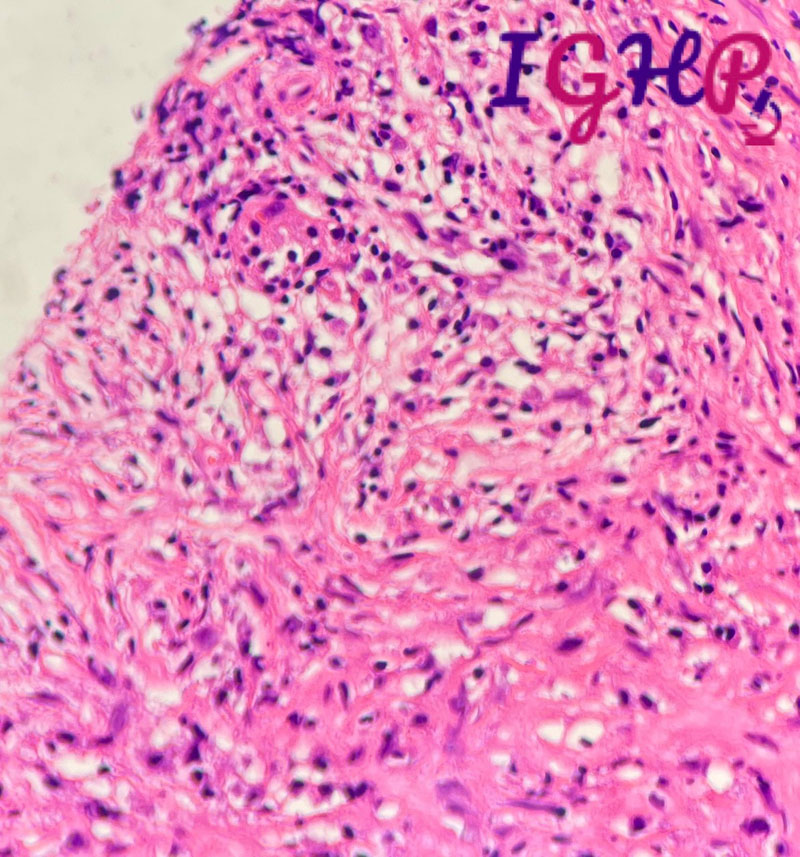
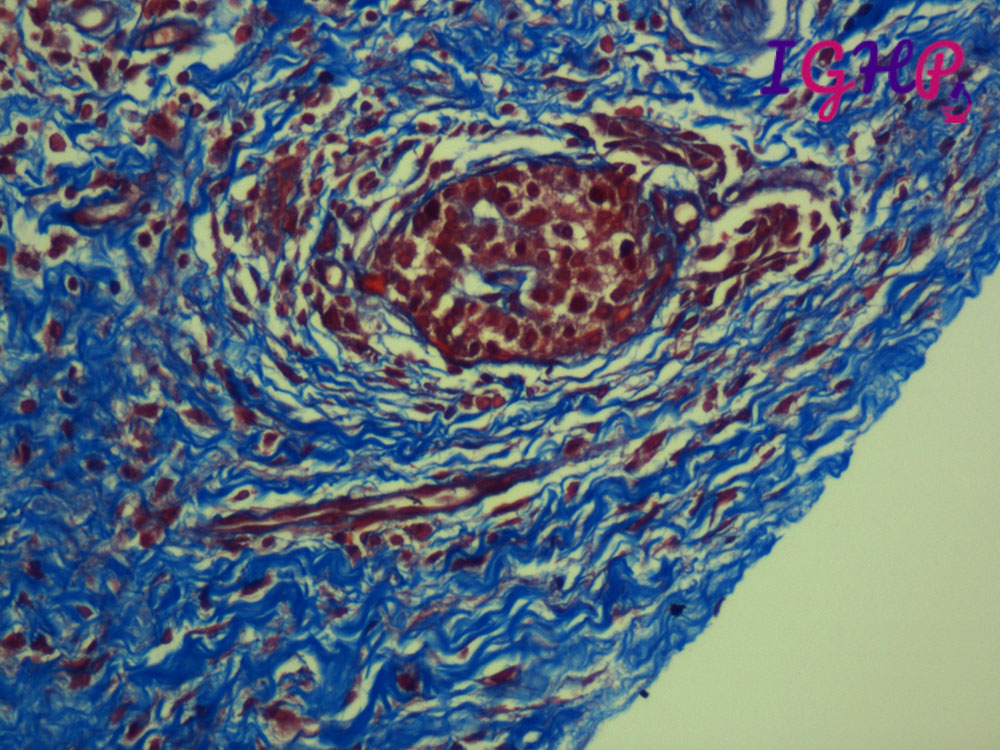
Microscopic examination showed atypical bile ductular proliferation in dense sclerotic stroma. Areas of mild nuclear pleomorphism noted. Intraluminal apoptotic debris seen.
Special Stains Performed-
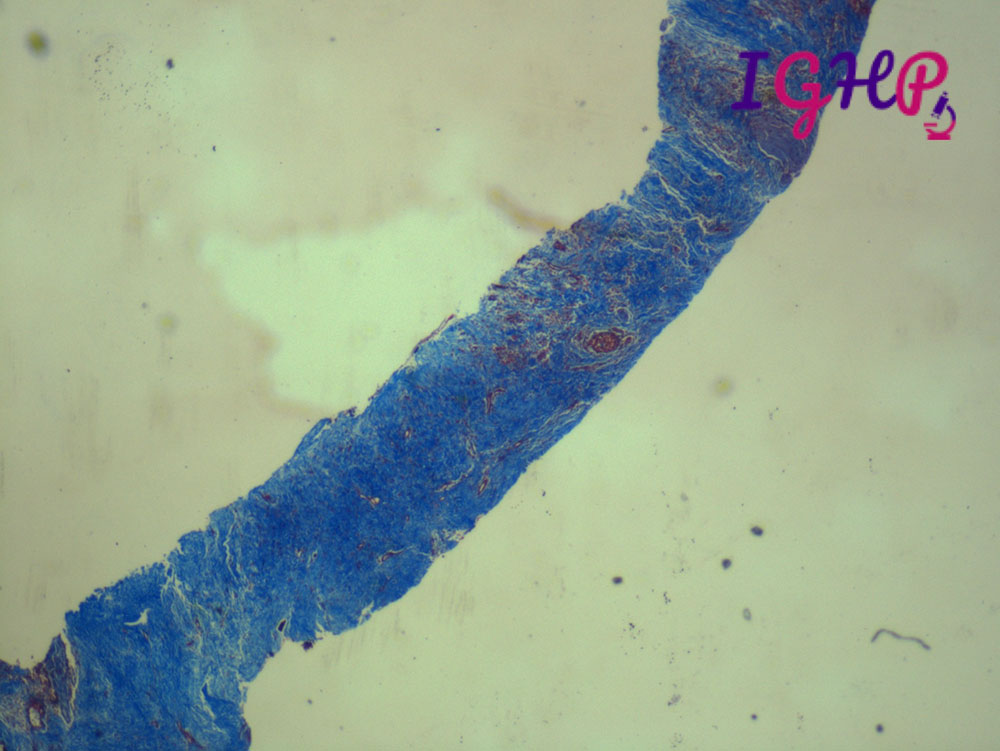
MT stain performed showed dense sclerotic desmoplastic stroma
Immunohistochemistry Performed-
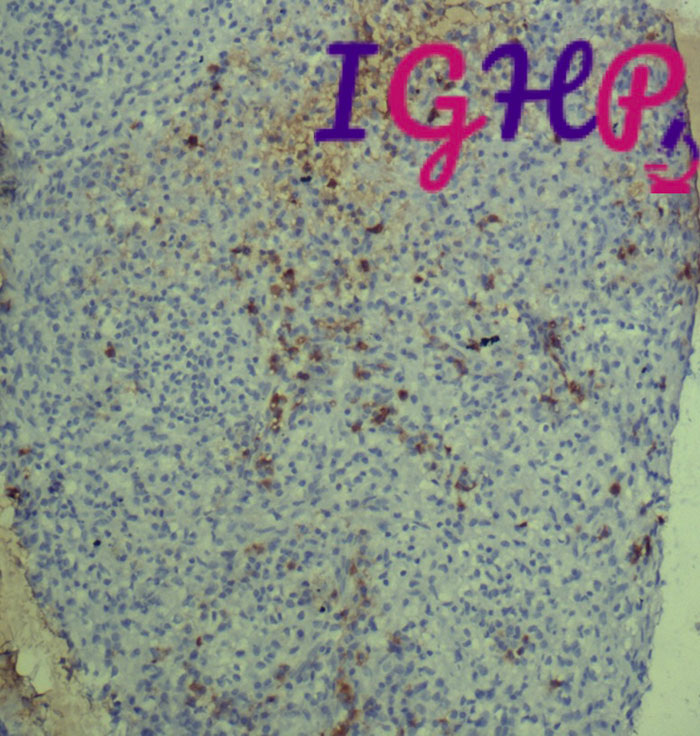
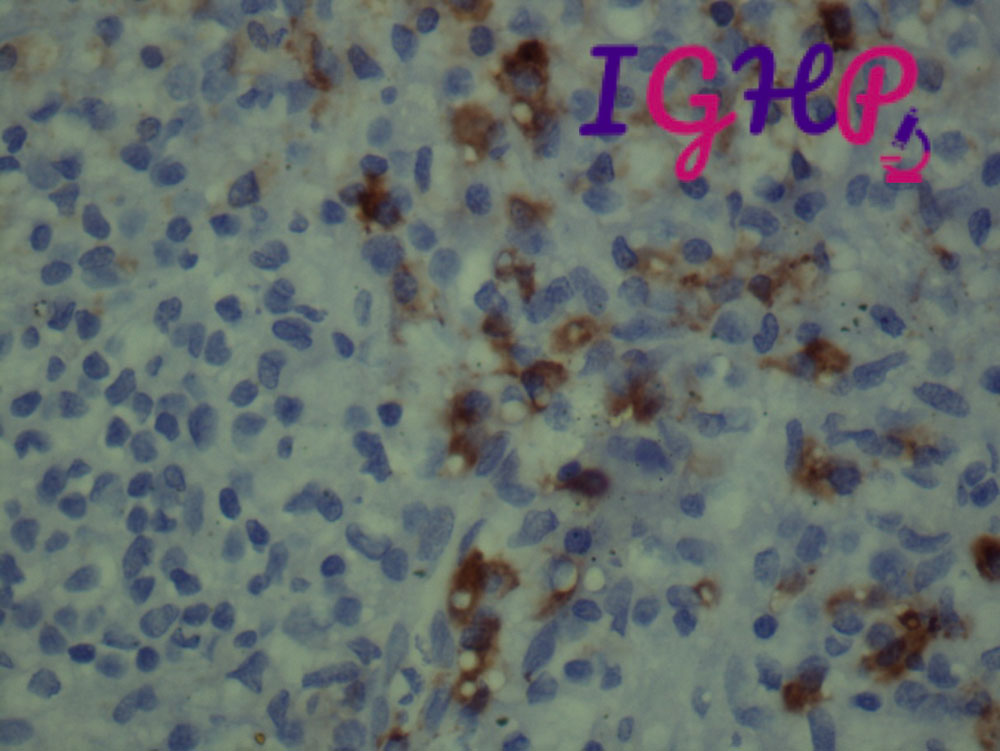
IHC performed for CK7, KI67 and P53
Diagnosis-
Biliary Cholangiopathy
Sorry! Your answer is incorrect
Von Meyenberg Complex
Sorry! Your answer is incorrect.
Bile Duct Adenoma
Sorry! Your answer is incorrect.
Intrahepatic Cholangiocarcinoma, Small Duct Type
Congratulations! Your answer is correct
Intrahepatic cholangiocarcinoma (ICCA) is classified into two main subtypes: small duct and large duct types. Small duct ICCAs are typically mass-forming (MF) type, while large duct ICCAs usually present as the periductal-infiltrating (PI) or the intraductal-growing (IG) type. Small duct type cholangiocarcinoma should be distinguished from bile duct adenoma. Size of lesion <2cm, circumscribed margins, inflammatory infiltrate and fibrous stroma is seen in BDA. Ki67 index is low and P53 is wild type, ICCA show tubular glands in dense sclerotic desmoplastic stroma, mild nuclear pleomorphism, less inflammation and infiltrative margins. Are usually large peripheral mass with KI67 index of over 10% and P53 could be mutant.